
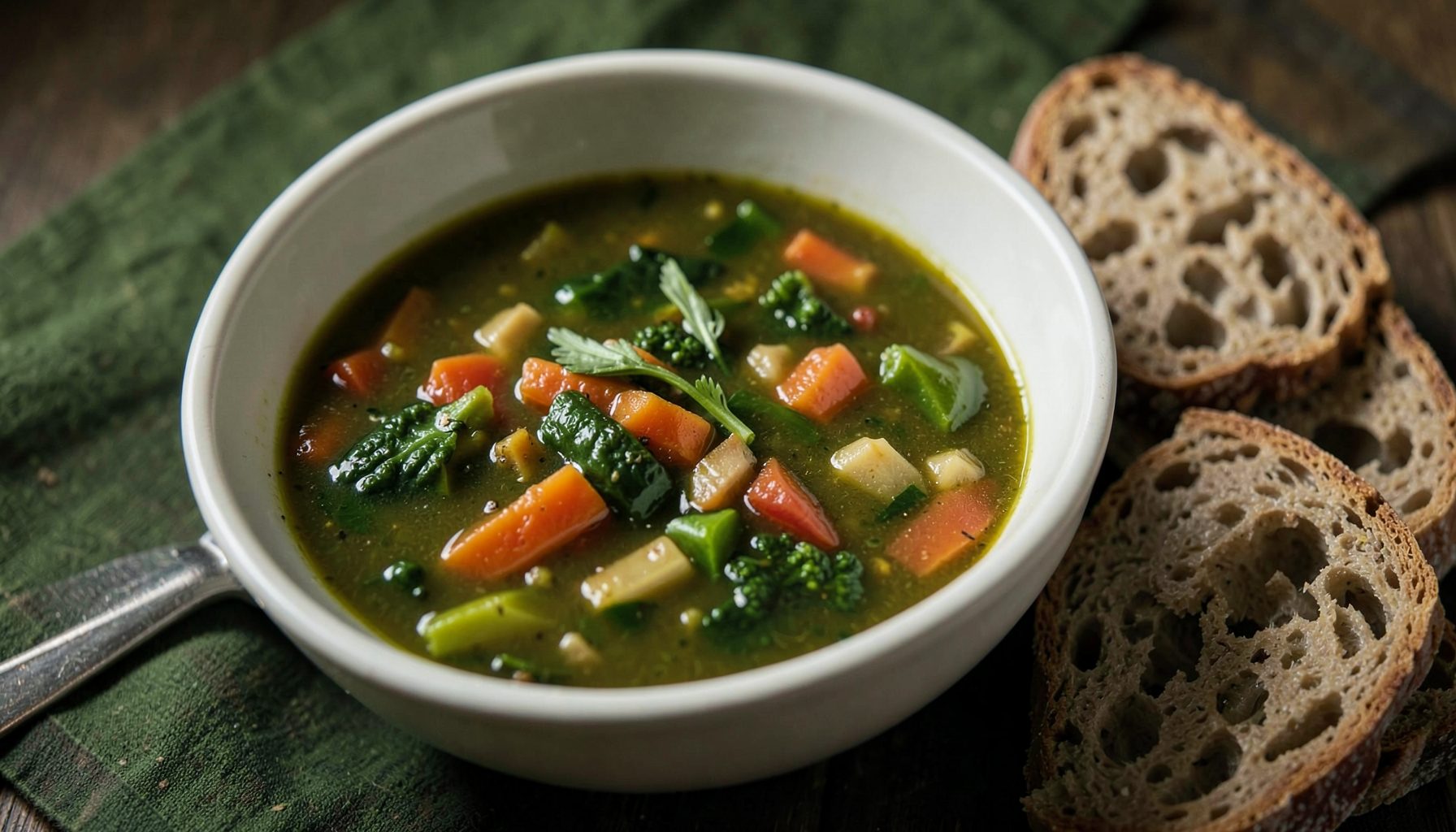
A creamy coconut and lemongrass chicken soup with rice noodles
There are soups that simmer quietly in the background, and then there are soups that fill the kitchen with fragrance before the first spoonful. This chicken noodle soup belongs to the second group. Lemongrass, ginger, garlic, chile, and lime build a bright aromatic base, while coconut milk gives the broth a smooth, rounded richness.
Rice noodles make the bowl satisfying without weighing it down. Tender chicken, crisp vegetables, and fresh herbs add contrast to the creamy broth, creating a meal that feels comforting in cool weather yet fresh enough for a warm evening. The ingredients are easy to find, and the method is forgiving once the flavor base is established.
At seasonal cooking stories, I return often to the idea that good home cooking depends on balance: richness needs acidity, sweetness needs heat, and a soft texture needs something crisp alongside it. This soup brings all of those elements together in one generous bowl.
Build the flavor base slowly
The first step is to gently cook the aromatics in a little neutral oil. Use the pale inner portion of lemongrass, thinly sliced or bruised with the side of a knife, along with minced garlic, grated ginger, and shallot or onion. If you enjoy heat, add a sliced Thai chile or a pinch of crushed red pepper. Keep the heat moderate so the garlic becomes fragrant without browning too deeply.
Once the aromatics soften, stir in a spoonful of Thai red curry paste. The paste adds chile, spices, herbs, and fermented depth, though the soup can be made without it. Cook it for a minute or two, allowing the oil to release its color and fragrance. This brief step makes the finished broth taste more developed than simply whisking curry paste into liquid.
Pour in chicken stock and coconut milk, scraping the bottom of the pot as the liquid comes to a gentle simmer. Full-fat coconut milk gives the silkiest texture, while light coconut milk creates a thinner, cleaner broth. For a particularly luxurious result, use one can of full-fat coconut milk and enough stock to reach the consistency you prefer.
Choose chicken that stays tender
Boneless, skinless chicken thighs are ideal for this soup because they remain juicy as the broth simmers. Slice them into thin strips across the grain, or poach the thighs whole and shred them after cooking. The second method produces larger, rustic pieces and gives you more control over doneness.
Chicken breasts can work well, especially if you prefer their leaner texture, but add them later and cook them gently. A hard boil can make breast meat firm and dry. Keep the broth just below a simmer, then remove the pot from the heat as soon as the chicken reaches 165°F. Residual heat will finish the cooking while the meat rests in the broth.
For another approach, use leftover roast chicken. Add it near the end, just long enough to warm through. This is a useful way to turn yesterday’s dinner into something completely different. When working with roasted meat, the small details matter; these notes on resting roasted meats explain why keeping juices in the meat makes such a difference.
Keep the rice noodles springy
Rice noodles cook quickly, and that is both their advantage and their main trap. If they simmer too long in the soup, they can become soft and absorb much of the broth. The best method depends on the noodle variety, so check the package directions and aim for just tender.
For thin vermicelli, soak the noodles in hot water until pliable, then drain them well. For wider rice sticks, blanch them briefly in boiling water. You can place the noodles directly into serving bowls and ladle the hot soup over them, or add them to the pot during the final minute of cooking.
If you expect leftovers, keep the noodles separate from the soup. Store them in a sealed container with a small splash of water or oil, then reheat the broth and combine everything just before serving. This preserves the noodles’ delicate chew and prevents the next day’s soup from becoming overly thick.
| Ingredient | What it contributes | Practical substitute |
|---|---|---|
| Lemongrass | Citrusy, floral aroma | Lime zest plus a little extra ginger |
| Coconut milk | Creaminess and gentle sweetness | Unsweetened coconut cream diluted with stock |
| Chicken thighs | Tender, savory meat | Breast meat, shredded roast chicken, or tofu |
| Thai red curry paste | Spice and layered seasoning | Mild curry powder plus chile flakes |
| Fish sauce | Salty, fermented depth | Soy sauce or tamari |
| Rice noodles | Light, springy substance | Rice vermicelli, soba, or cooked jasmine rice |
| Lime juice | Fresh acidity | Rice vinegar with a little lime zest |
Balance the broth at the end
A coconut broth can taste rich but muted until the final seasonings are added. Fish sauce brings salt and savory depth, while lime juice cuts through the coconut milk and wakes up the lemongrass. Add both gradually, tasting after each addition. The goal is a broth that tastes bright and rounded rather than sharply sour or overly salty.
A small amount of brown sugar, palm sugar, or honey can smooth the edges of the curry paste and lime. Sweetness should remain in the background, supporting the other flavors rather than making the soup taste sugary. If the broth seems flat, it may need more salt or acid rather than more curry paste.
Add delicate vegetables according to how long they need to cook. Mushrooms can simmer with the chicken, while snow peas, baby spinach, bok choy, and bean sprouts are best added near the end. Finish each bowl with cilantro, Thai basil, sliced scallions, toasted coconut, or crushed peanuts. A few thin slices of fresh chile make the presentation lively and let diners adjust the heat.
Make the soup your own
This recipe offers a flexible foundation. Add mushrooms for earthiness, shredded carrots for sweetness, or corn for a sunny seasonal note. Broccoli florets and green beans work well when cut into small pieces. In spring, tender asparagus can replace some of the vegetables; in colder months, cubes of sweet potato make the soup more substantial.
For a seafood version, use shrimp or chunks of firm white fish instead of chicken. Add shrimp during the final few minutes and cook until pink and opaque. Firm fish needs gentle handling, so lower it into the broth after the aromatics and coconut milk have finished simmering. Tofu is another excellent choice, especially when browned first for a little texture.
Heat level is easy to adjust. Red curry paste varies considerably between brands, so start with less than you think you need. Extra chile can be added at the table, while a spoonful of coconut milk can soften a broth that has become too fiery. A drizzle of chile oil provides heat without changing the main flavor of the soup.
Serve it with contrasting textures
Because the soup is soft and creamy, garnishes should bring freshness and crunch. Bean sprouts, cucumber matchsticks, shredded cabbage, fried shallots, roasted peanuts, and crisp wonton strips all provide a pleasant contrast. Use only a few at a time so the bowl remains composed rather than crowded.
Serve the soup in warmed bowls with the noodles placed beneath the chicken and vegetables. Ladle the broth around them, then add herbs and lime wedges at the very end. This arrangement keeps the garnishes fresh and allows each person to adjust the final acidity at the table.
A chilled, dry white wine is a natural pairing, particularly one with bright acidity and modest oak. Riesling, Grüner Veltliner, Sauvignon Blanc, or sparkling wine can all work well. If you prefer beer, choose a crisp lager or a lightly citrusy wheat beer. For a nonalcoholic option, sparkling water with lime, ginger, and a few bruised mint leaves echoes the soup’s lively aromatics.
Small choices for a better bowl
The best version comes from paying attention to timing and tasting as you go. These simple habits keep the broth fragrant, the chicken moist, and the noodles from overwhelming the soup:
- Bruise lemongrass before simmering it so its oils escape into the broth.
- Taste after adding curry paste, fish sauce, and lime rather than seasoning heavily at the beginning.
- Keep the broth at a gentle simmer to protect the texture of the chicken and coconut milk.
- Cook rice noodles separately when you plan to have leftovers.
- Finish every bowl with something fresh, such as herbs, lime, scallions, or sprouts.
A pot of this soup is especially welcome when the weather turns cool, but its bright flavors make it useful throughout the year. Prepare the broth ahead, add the chicken and vegetables when you are ready to eat, and cook the noodles at the last moment for a relaxed dinner with restaurant-style aroma.
Gather the ingredients, let the lemongrass and ginger perfume the kitchen, and make the recipe part of your own cooking rhythm. Share your bowl with family, pair it with a crisp drink, and return to Rich and Sweet by Bia Rich for more recipes, kitchen wisdom, and food stories shaped by generous flavors.