
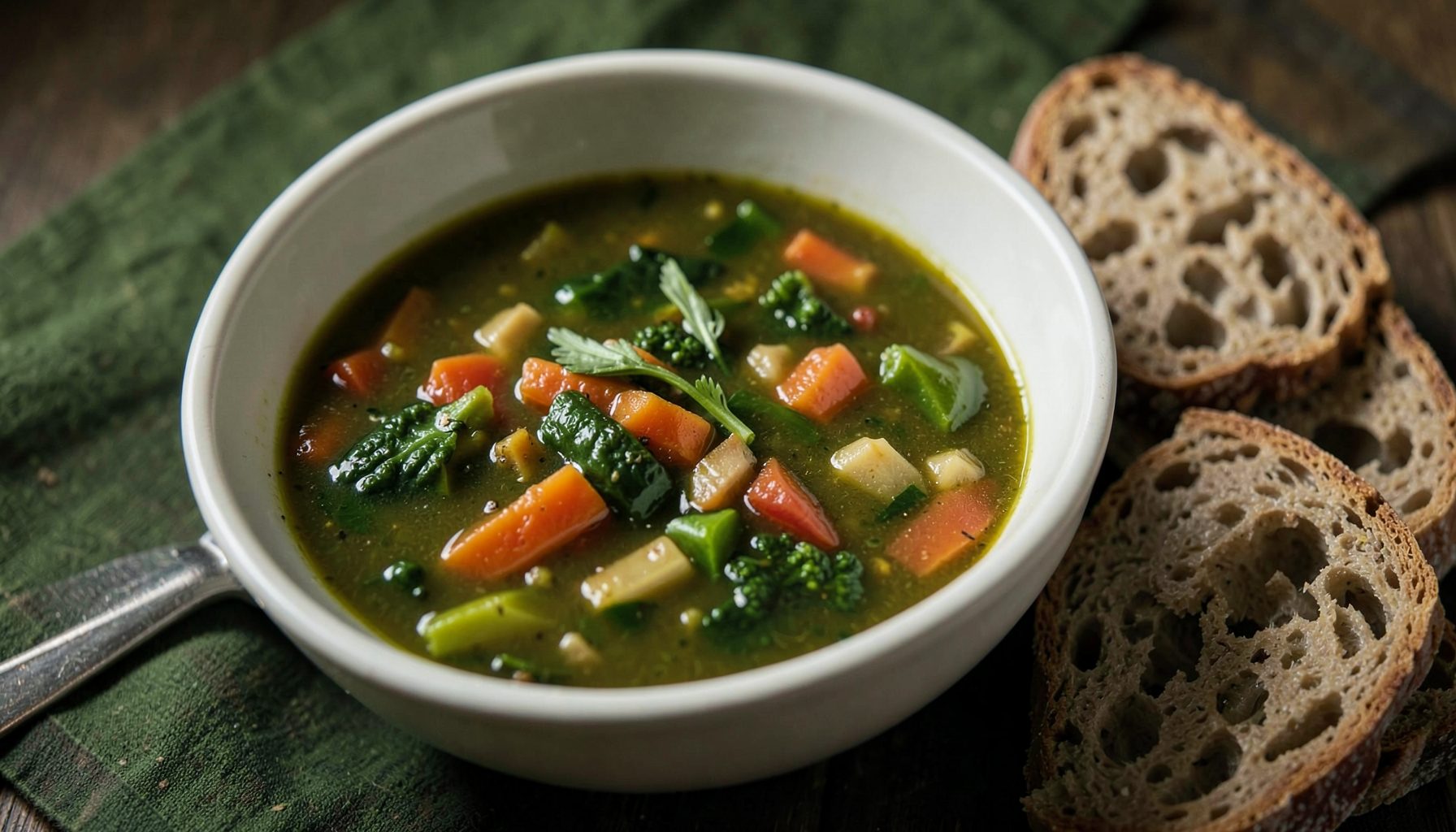
A deeply flavorful French onion soup with Gruyère croutons
French onion soup is built from a short list of humble ingredients, yet it rewards attention at every stage. Onions must be cooked until deeply bronzed, stock should taste savory rather than watery, and the bread-and-cheese topping needs enough structure to remain crisp at the edges while melting into the broth below.
This version leans into that contrast. Sweet onions become jammy and aromatic, a splash of wine lifts their caramelized flavor, and a small amount of flour gives the broth just enough body to carry the cheese. Gruyère brings nuttiness and a generous melt, while toasted country bread keeps each spoonful substantial.
The soup is especially welcome on a cool evening, but it is also practical cooking. The onions can be caramelized ahead, the stock can be prepared from pantry staples, and the assembled bowls finish under the broiler just before serving. A little patience creates a dish that tastes far more elaborate than its ingredient list suggests.
Choosing onions and building the base
Yellow onions are the most dependable choice because they offer a good balance of sweetness and savory depth. White onions can create a sharper, cleaner flavor, while a few sweet onions make the finished soup rounder. Using a mixture is perfectly acceptable, especially when cooking with what is already in the kitchen. Plan on roughly three pounds of trimmed onions for six generous servings.
Slice the onions from root to stem into thin, even half-moons. Uniform pieces matter because small fragments can burn before thicker pieces have softened. A wide, heavy-bottomed Dutch oven or sauté pan gives the onions room to release moisture instead of steaming in a crowded layer. Begin with unsalted butter and olive oil together: butter supplies richness, while oil helps prevent scorching.
Salt the onions early, but lightly. It draws out moisture and seasons the vegetables from within. The goal during the first half hour is softness, not color. Stir every few minutes, scraping the bottom whenever golden bits appear. If the onions begin sticking aggressively, lower the heat and add a tablespoon of water rather than reaching for more oil.
Taking caramelization seriously
The defining flavor comes from slow caramelization, not from adding brown sugar. Cook the onions over medium-low heat for 45 to 65 minutes, depending on the width of the pan and the intensity of the burner. They will collapse dramatically, moving from firm white ribbons to a glossy mass colored deep amber. The final stage requires close attention because the sugars can shift from beautifully browned to bitter in a short time.
When the onions are ready, add minced garlic and fresh thyme for the last minute. Deglaze with dry white wine, vermouth, or a modest pour of brandy. Scrape up every browned fond particle as the liquid simmers. Wine is not there to make the soup taste alcoholic; it brings acidity and keeps the sweetness of the onions from becoming heavy. For a nonalcoholic version, use a little apple cider vinegar mixed with stock.
A spoonful of flour can be stirred into the onions before the liquid goes in. This classic step gives the broth a gentle, velvety quality, but it should not make the soup thick like gravy. Cook the flour for two minutes so it loses its raw taste, then add warm beef stock gradually while stirring. A combination of beef and chicken stock creates a balanced result if an all-beef broth feels too forceful.
Balancing the broth
Use the best stock available, since the onions cannot hide a thin or overly salty foundation. Homemade stock is wonderful, but a good low-sodium boxed broth works well when strengthened with a few additions. A parmesan rind, thyme sprigs, bay leaf, and a small pinch of black pepper can simmer with the soup for 25 to 30 minutes before being removed.
Taste only after the broth has reduced slightly. Caramelized onions vary in sweetness, and prepared stocks differ considerably in salt. The finished liquid should be savory, lightly sweet, and bright enough to invite another spoonful. If it tastes flat, try a few drops of sherry vinegar. If it tastes harsh, let it simmer longer or add a small knob of butter at the end.
This is also a good place to consider texture. Some cooks prefer the onions to remain in long strands, while others like a softer, more integrated soup. For a silkier bowl, chop the onions before cooking or use an immersion blender for just a few pulses. Avoid puréeing the entire soup unless you want to lose the characteristic strands that make French onion soup so recognizable.
| Component | What to use | Purpose |
|---|---|---|
| Onions | About 3 pounds yellow, white, or mixed | Sweetness, body, and the soup’s central flavor |
| Cooking fat | Butter plus olive oil | Richness with better heat tolerance |
| Aromatics | Garlic, thyme, bay leaf, black pepper | Savory fragrance and background depth |
| Deglazing liquid | Dry white wine, vermouth, or brandy | Acidity and browned-pan flavor |
| Stock | Beef, or beef combined with chicken | A full, balanced broth |
| Thickener | A small amount of all-purpose flour | Subtle body without heaviness |
| Topping | Country bread and Gruyère | Crisp texture, nuttiness, and a molten finish |
Preparing the Gruyère croutons
Choose a sturdy loaf with an open crumb and a firm crust. Sourdough, pain de campagne, or a rustic French boule all work better than soft sandwich bread because they can absorb broth without disappearing. Cut slices slightly thinner than an inch and toast them until dry and golden. Toasting is essential: untoasted bread quickly turns soggy and can dissolve before the cheese has properly browned.
Rub the warm toast with a cut garlic clove if you enjoy a sharper aromatic note. Gruyère should be grated from a block for the smoothest melt, and a cheese with moderate age offers the best compromise between nuttiness and creaminess. Very aged Gruyère has excellent flavor but may melt less evenly. A little Comté, Emmental, or sharp alpine cheese can be blended in, though Gruyère should remain the dominant flavor.
Ladle the hot soup into broiler-safe crocks, leaving space at the top. Set a toasted slice over each bowl and cover it generously with cheese, allowing some to spill onto the rim where it will form browned, frilly edges. Place the crocks on a baking sheet before broiling. That small precaution makes transferring them safer and catches any bubbling broth or melted cheese.
Cooking the soup ahead
The onion base improves after a night in the refrigerator, making this an excellent dinner-party dish. Caramelize the onions, finish the broth, cool it promptly, and refrigerate it in a covered container. The next day, skim away any firm fat if desired, warm the soup gently, and adjust the seasoning before adding the bread and cheese.
Keep the croutons separate until serving. Stored on top of the soup, they lose their crisp edges and become dense. If you are organizing a larger meal, toast the bread earlier in the day, grate the cheese in advance, and arrange the bowls on a baking sheet. The final broil then takes only a few minutes.
A crisp, acidic side dish helps balance the soup’s richness. For a bright counterpoint, serve a simple green salad with mustard vinaigrette or add something tangy from the pantry. These quick pickled vegetables bring a lively crunch to the table and make the meal feel less heavy without competing with the soup’s savory character.
Small choices that deepen the bowl
A few restrained decisions can make the difference between a good onion soup and one with remarkable depth.
- Caramelize the onions in a wide pan, using medium-low heat and frequent scraping.
- Warm the stock before adding it so the onion mixture continues cooking evenly.
- Add acidity gradually with wine, sherry vinegar, or a few drops of lemon juice.
- Toast the bread thoroughly before it meets the broth.
- Broil the cheese close to the heat, watching constantly once it begins to bubble.
Fresh thyme is traditional, but rosemary can overpower the delicate sweetness of the onions. A small amount of chopped parsley added after broiling gives the soup color and a fresh herbal lift. For a richer variation, replace a portion of the stock with dry cider or add a spoonful of roasted garlic to the broth.
Serve the bowls while the cheese is still bubbling and the edges of the crouton remain crisp. A broad, shallow crock makes the best ratio of topping to broth, while a deeper bowl keeps the soup hotter for longer. Put a small knife beside each place setting so diners can break through the browned cheese without wrestling with the bread.
Serving and pairing ideas
This soup can stand alone as a substantial first course or a light main dish with salad. If serving it as part of a larger menu, keep the other dishes fresh and simply seasoned. A roast chicken, baked fish, or vegetable tart can follow, and the collection of entree recipes offers plenty of directions for building a meal around the soup without repeating its richness.
For wine, choose something with enough acidity to refresh the palate. A dry Chardonnay, unoaked if you prefer a leaner pairing, works beautifully with Gruyère. Pinot Noir adds gentle red-fruit contrast, while a rustic Rhône blend echoes the soup’s earthy, savory side. Beer drinkers might choose a saison or a crisp amber lager rather than a very bitter IPA.
The most satisfying garnish is usually the simplest: a few thyme leaves, freshly cracked pepper, and perhaps a tiny drizzle of good olive oil. Avoid piling on extra cheese after broiling, since it can overwhelm the onion flavor and make the surface greasy. Let the soup’s long-cooked sweetness remain the star.
Once you have made it, save a portion of the caramelized onions for another meal. They can enrich a pan sauce, fill an omelet, top a savory tart, or fold into mashed potatoes. The work of slowly cooking onions pays dividends well beyond a single bowl, which is one reason this technique deserves a regular place in a home kitchen.
Make a pot when the weather turns cool, give the onions the time they need, and finish each serving with crisp bread and bubbling Gruyère. Bring the crocks to the table straight from the oven and share this deeply savory, comforting soup while the topping is at its most irresistible.