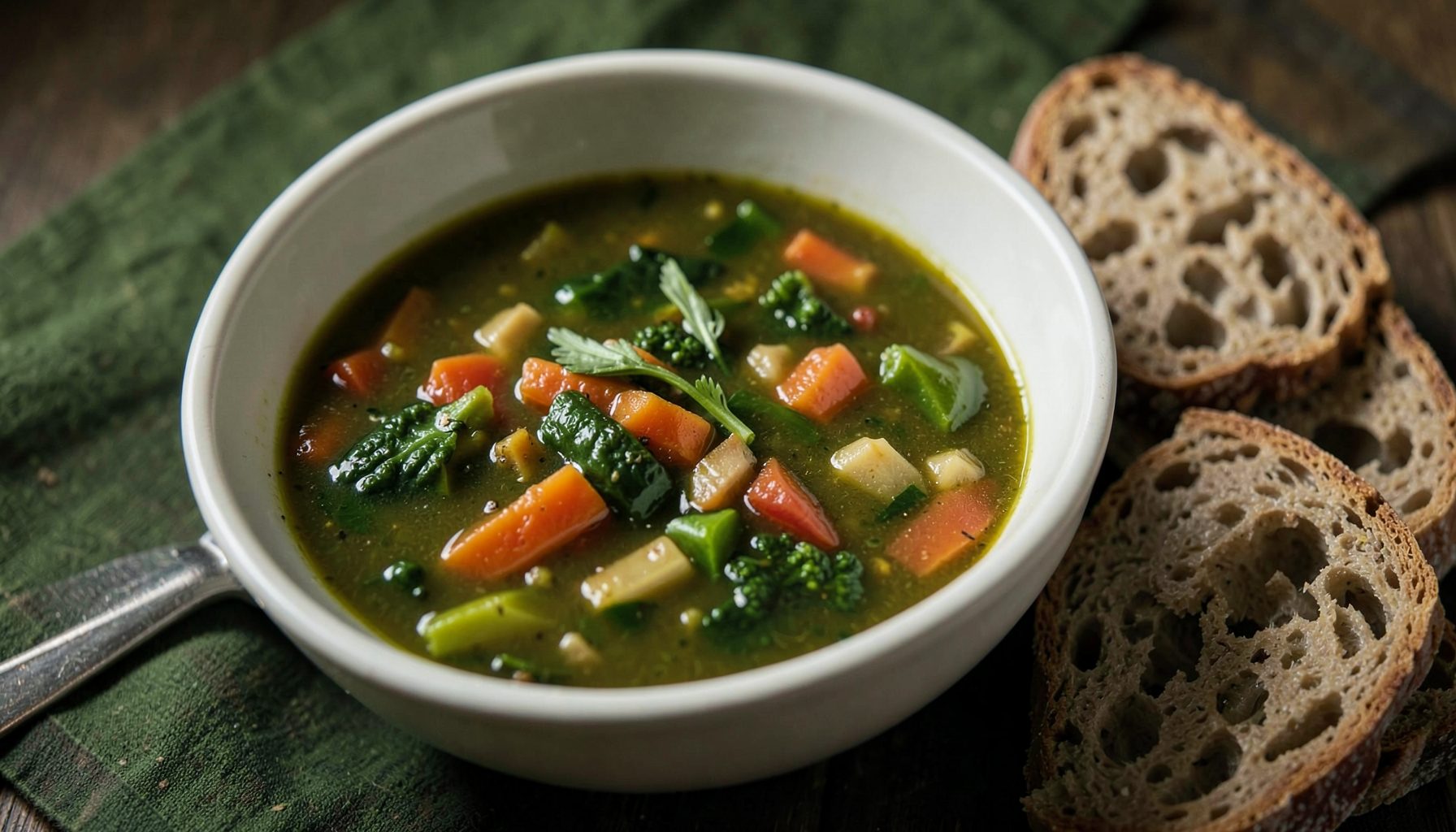
Smoky Roasted Red Pepper and Tomato Soup with Basil Oil
A good tomato soup should taste like more than tomatoes. It needs sweetness, savory depth, gentle acidity, and a texture that feels generous rather than thin. Roasting the vegetables first brings those qualities into focus, concentrating their natural sugars while adding a faint charred edge. Learn more about A Rich Mushroom And Gruyère Tart With A Flaky Butter Crust.
This smoky roasted red pepper and tomato soup begins with ripe tomatoes, red bell peppers, onion, and garlic. The vegetables soften and caramelize in a hot oven before they are blended with stock and finished with cream, olive oil, or neither, depending on the character you want. A vivid basil oil provides the fresh, peppery note that keeps every spoonful lively.
The recipe is especially welcome when late-summer produce is abundant, though canned tomatoes and store-bought peppers make it practical year-round. Serve it as a light supper, a first course, or a satisfying partner for good bread and a crisp glass of wine.
Roast The Vegetables For Depth
Use tomatoes that are ripe but still firm enough to hold their shape on the baking sheet. Roma tomatoes produce a naturally thick soup, while beefsteak or heirloom varieties bring a juicier, more fragrant result. Red bell peppers should have glossy skin and feel heavy for their size.
Cut the tomatoes into halves or thick wedges, depending on their size. Remove the cores from the peppers, then divide them into broad pieces. Add wedges of yellow onion and several unpeeled garlic cloves. Toss everything with olive oil, kosher salt, black pepper, and a small pinch of smoked paprika.
Roast at 425°F until the tomato edges have darkened, the peppers are tender, and the onions show caramelized spots. This usually takes 35 to 45 minutes. Avoid crowding the pan: vegetables packed too closely will steam instead of roast. A little separation allows moisture to evaporate and gives the finished soup its concentrated flavor.
For a deeper smoky note, place the roasted peppers in a bowl and cover it for ten minutes. The trapped steam loosens their skins, making them easy to peel. This step is optional, but removing the skins creates a more polished soup and eliminates any tough, papery fragments.
Build A Balanced Soup Base
Warm the roasted vegetables in a large saucepan with vegetable or chicken stock. Add the peeled garlic and any juices left on the baking sheet; those browned bits are full of flavor. A bay leaf, a small sprig of thyme, or a pinch of red pepper flakes can be added at this stage, but keep the seasoning restrained until blending.
Simmer the mixture for about fifteen minutes. The goal is to bring the flavors together, not to cook the vegetables for a long time. Prolonged boiling can flatten the fresh tomato character and make the soup taste overly stewed.
Blend with an immersion blender directly in the pot, or use a countertop blender in batches. When working with hot liquid, remove the center cap from the blender lid and cover the opening with a folded towel. This allows steam to escape safely. Blend until smooth, or leave a little texture if you prefer a rustic bowl.
Taste after blending. Tomatoes vary greatly in acidity, so the soup may need a small spoonful of honey or maple syrup to soften sharpness. A splash of sherry vinegar or fresh lemon juice can brighten a soup that tastes heavy. Salt should be added gradually, since stock and roasted vegetables may already contain plenty.
Make Basil Oil While The Soup Simmer
Basil oil takes just a few minutes but gives the dish its defining finish. Use tender basil leaves with bright color and no bruised edges. Blanching the leaves briefly in boiling water, followed by an ice bath, helps preserve their green appearance. Pat them very dry before blending, since excess water can make the oil cloudy and shorten its life.
Blend the basil with extra-virgin olive oil and a pinch of salt. For a delicate oil, strain it through a fine sieve or cheesecloth. For a more rustic drizzle, leave the basil particles suspended in the oil. A little lemon zest can provide extra freshness, though it should remain subtle enough to let the basil lead.
The oil can be made several hours ahead and kept covered in the refrigerator. Let it come close to room temperature before serving so the aroma opens up. Drizzle it over each bowl at the last moment rather than stirring it into the pot. The contrast between red soup and green oil is beautiful, and the separate flavors remain easier to appreciate.
This finish follows the same principle as adding a final herb, toasted nut, or sharp condiment to a composed dish: the last element should provide lift. For another meal built around bright contrast and fresh produce, pair the soup with a bright papaya salad, especially when the weather is warm enough for a lighter spread.
Choose The Texture And Finish
The ideal consistency depends on how you plan to serve the soup. A thick version feels substantial with grilled bread, while a smoother, more fluid soup works beautifully as a first course. Strain the blended soup if you want a restaurant-style finish, or thin it with additional stock for a looser bowl.
Cream is optional. Two or three tablespoons of heavy cream soften the acidity and create a rounder texture without turning the soup into a cream soup. Coconut milk offers a different direction, adding richness and a gentle sweetness. For a dairy-free version, rely on olive oil and the natural body of the roasted vegetables.
| Finish | Flavor and Texture | Best Pairing |
|---|---|---|
| Olive oil only | Bright, savory, and clean | Crusty sourdough or grilled vegetables |
| A little heavy cream | Round, silky, and mellow | Toasted cheese sandwich |
| Coconut milk | Softly sweet with a subtle tropical note | Spiced chickpeas or rice |
| Crème fraîche | Tangy, rich, and elegant | Herb-flecked crostini |
| No added fat | Direct vegetable flavor and lighter body | A composed salad or simple grain dish |
Garnishes should support the soup rather than bury it. Basil oil is enough for a refined presentation, but toasted pumpkin seeds, crumbled feta, small croutons, or a spoonful of crème fraîche can add contrast. A few drops of vinegar around the surface will sharpen the tomato flavor.
Serve It With Something Crisp
A bowl of roasted vegetable soup becomes a complete meal when served with bread that offers plenty of texture. Sourdough, country bread, or a seeded loaf can be toasted and rubbed with garlic. For a more indulgent plate, top the toast with melted Gruyère or sharp cheddar.
A rich pastry can also turn the soup into a memorable lunch. This flaky mushroom tart brings buttery pastry, earthy mushrooms, and nutty cheese to the table, complementing the soup’s smoky sweetness without competing with its tomato base.
For a lighter menu, serve smaller portions with a salad dressed in lemon vinaigrette. Bitter greens, shaved fennel, or crisp cucumber will refresh the palate. The soup can also be served in small cups as an opening course for a dinner centered on roasted chicken, grilled fish, or a vegetable tart.
Wine should echo the soup’s acidity rather than add heaviness. A dry rosé, unoaked Chardonnay, or light-bodied Pinot Noir will work well. For a nonalcoholic option, try sparkling water with lemon, or a tart shrub diluted with cold water.
Store And Reheat With Care
This soup keeps well, which makes it useful for advance cooking. Cool it promptly in a shallow container, then refrigerate it for up to four days. If you plan to store it longer, freeze the soup before adding cream. Dairy can separate during freezing, while the vegetable base generally reheats beautifully.
Freeze in individual portions, leaving space at the top of each container for expansion. Thaw overnight in the refrigerator or warm the frozen soup gently in a saucepan. Stir often as it reheats, and add a little stock if the texture has thickened.
Basil oil is best made fresh, but it can be refrigerated for several days in a sealed jar. Its color may darken slightly over time. Bring it to room temperature and stir before using. If the oil develops an unpleasant smell or flavor, discard it rather than trying to correct it.
When reheating the soup, avoid a hard boil. Gentle heat preserves the fresh flavor and keeps the texture smooth. Taste once more before serving, since refrigeration can mute acidity and salt. A final splash of vinegar, a pinch of pepper, and a new drizzle of basil oil will restore its balance.
Practical Choices For A Better Bowl
A few small decisions determine whether the soup tastes simply good or deeply layered. Fresh tomatoes are wonderful when fully ripe, but quality canned tomatoes are often more dependable outside their season. Roasting both types with peppers still creates a full-bodied result.
Use smoked paprika carefully. It should suggest wood smoke rather than dominate the vegetables. If the peppers become deeply blistered during roasting, you may need less paprika than expected. Freshly ground black pepper and a modest amount of red pepper flakes can provide warmth without obscuring the basil.
- Roast the vegetables until their edges are browned, not merely soft.
- Reserve the baking-sheet juices and browned bits for the soup.
- Adjust sweetness and acidity only after blending.
- Add basil oil at the table so its color and fragrance stay fresh.
- Freeze the base without dairy for the most reliable texture.
Make this soup when the market is full of tomatoes, when a cool evening calls for something warming, or when a few pantry staples need turning into dinner. Roast the vegetables slowly, blend with care, and finish each bowl with bright basil oil. The result is a simple, generous dish with enough character for company and enough practicality for an ordinary weeknight.