
Bia’s guide to a cozy soup and bread dinner party
A soup and bread supper has a generous kind of ease. The food can simmer while the room fills with conversation, and a loaf passed around the table makes even a simple meal feel abundant. This is the sort of gathering where guests settle in rather than hurry through several courses.
The best version begins with a menu that feels considered without becoming fussy. Choose one soup with a clear personality, one or two breads with contrasting textures, and a few bright accents to keep the meal balanced. Seasonal produce, a good stock, and thoughtful serving details will do more work than a crowded menu.
After years in New York City restaurant kitchens and many relaxed meals in the North Carolina countryside, I have learned that hospitality depends as much on rhythm as on recipes. Prepare the parts that improve with time, save a few tasks for the final hour, and give yourself permission to sit down with everyone else.
Decide on the evening’s rhythm
A cozy dinner party works best when guests know what kind of evening to expect. This gathering might begin with drinks and a small nibble, move into soup and bread at the table, and finish with fruit, cookies, or a modest dessert. There is no need to create a restaurant-style progression when the pleasure is in lingering.
Plan for six to eight people if you are hosting in a home kitchen for the first time. That number is large enough to feel festive but small enough for one large Dutch oven, a couple of serving baskets, and a table where everyone can hear one another. If your group is larger, consider offering one soup rather than several so the cooking remains manageable.
Give guests a little information when you invite them. Mention whether the soup includes meat, dairy, or a particular spice, and ask about allergies early. A warm, inclusive menu is easier to enjoy when no one has to guess what is in the bowl.
Build the menu around one excellent soup
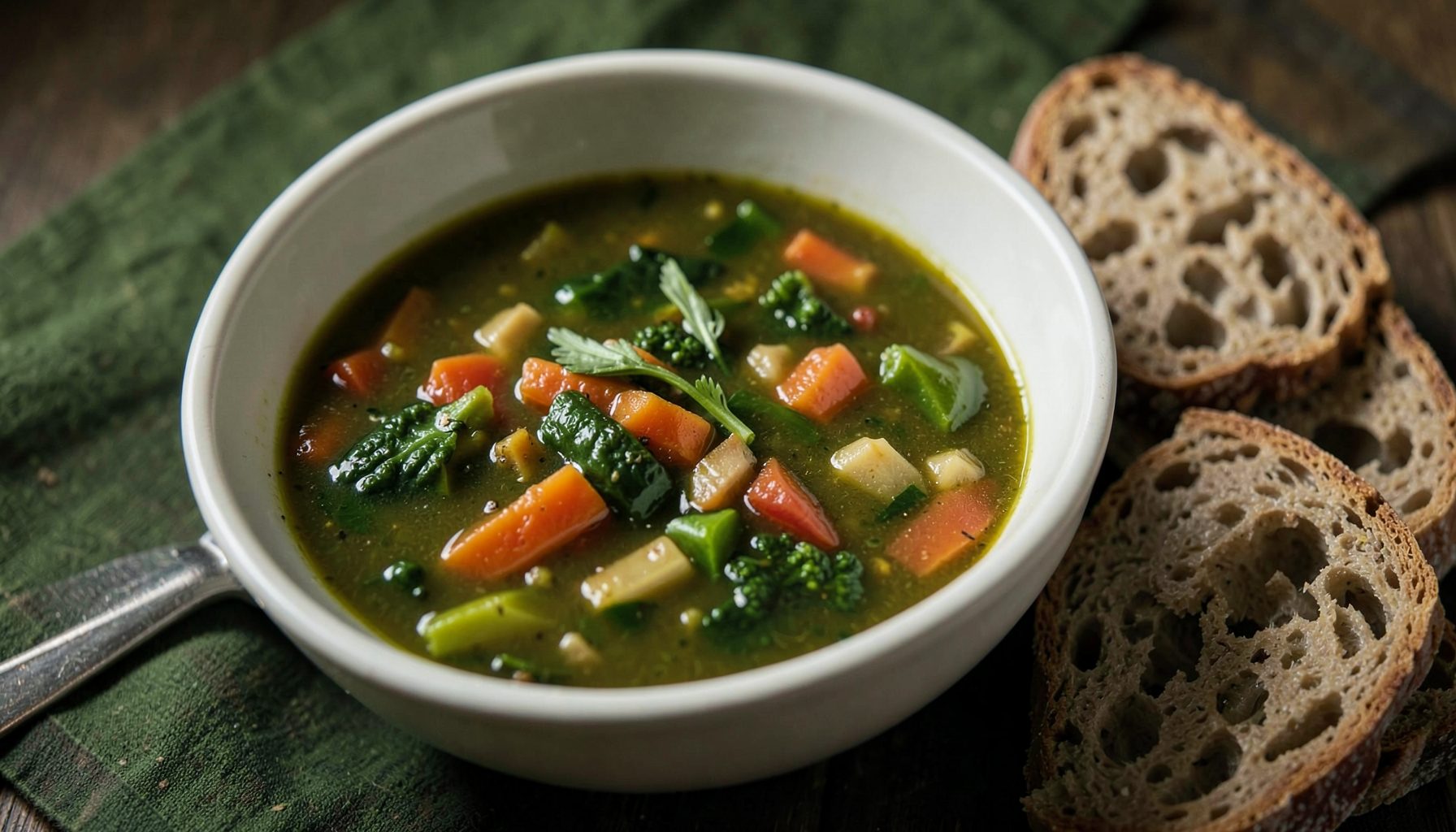
Choose a soup that can be made ahead and gently reheated. Creamy root vegetable soup, white bean and kale soup, chicken and rice soup, lentil soup, and slow-simmered tomato soup all hold well. The goal is a bowl with enough depth to stand beside bread, salad, and a glass of wine.
Think in terms of contrast. A rich squash soup benefits from a bitter green salad and a sharp garnish of pickled onions. A brothy bean soup welcomes a drizzle of olive oil, grated Parmesan, and a loaf with a crisp crust. A hearty stew-like soup may need only a fresh herb finish and a simple vegetable side.
Garnishes should bring color, texture, or acidity. Toasted seeds, chopped herbs, crème fraîche, chile oil, crisp breadcrumbs, or a spoonful of pesto can transform familiar soup into a composed dish. Prepare garnishes in advance and place them in small bowls so guests can finish their own servings.
For an especially flavorful accent, make a batch of slow-roasted tomatoes. Their concentrated sweetness works beautifully with tomato, white bean, and vegetable soups, and the leftovers can be spread on bread the next morning.
Choose bread with texture and purpose
Bread is the companion that makes this dinner feel complete. Plan for about four to six ounces per guest, allowing extra if the loaf is particularly good. One substantial bread can be enough, though serving two styles makes the table feel generous: perhaps a chewy country loaf alongside tender cornbread, seeded rolls, or crisp cheese toasts.
If baking is part of your pleasure, choose a recipe that fits your schedule. A no-knead loaf can rise while you prepare the soup, while a quick skillet bread is useful when the menu comes together in one afternoon. For a dinner party, avoid testing a complicated dough for the first time unless you have a backup loaf in the freezer or from a trusted bakery.
Warm bread just before serving, but do not wrap a crisp loaf tightly in foil for too long or the crust will soften. Set it in a cloth-lined basket with a serrated knife nearby. Serve softened butter, salted butter, or a bowl of olive oil with herbs. A little flaky salt scattered over whipped butter is an easy detail that feels special.
| Soup style | Bread pairing | Fresh contrast | Finishing touch |
|---|---|---|---|
| Creamy squash or carrot | Seeded country loaf | Bitter greens with cider vinaigrette | Toasted pepitas and crème fraîche |
| Tomato and white bean | Garlic toast or sourdough | Fennel and citrus salad | Basil oil or roasted tomatoes |
| Chicken and rice | Soft dinner rolls | Celery, parsley, and lemon salad | Black pepper and grated cheese |
| Lentil and sausage | Cornbread or rye | Pickled vegetables | Chopped scallions and yogurt |
| Mushroom and barley | Cheddar biscuits | Apple and radicchio salad | Thyme butter |
Make the table warm before guests arrive
The atmosphere should suggest comfort without requiring elaborate decorating. A low arrangement of garden branches, rosemary, or late-season flowers allows people to see across the table. Use cloth napkins if you have them, but clean tea towels or simple cotton napkins can look just as welcoming when folded casually.
Soup bowls should be warm if possible. Place them in a low oven for a few minutes or fill them with hot water, then dry them before serving. This small step keeps soup hot longer, especially when guests are talking between ladlefuls. Keep the pot nearby on a trivet rather than carrying it around the room if it is heavy.
Set out serving spoons, ladles, butter knives, and extra napkins before anyone arrives. A bowl for bread ends, a small dish for used spoons, and a pitcher of water prevent the kitchen from becoming a series of interruptions. Candlelight is lovely, but unscented candles are the better choice around food.
Pour drinks that support the meal
Soup dinners benefit from drinks with freshness and moderate alcohol. A dry white wine such as Sauvignon Blanc, Grüner Veltliner, or unoaked Chardonnay can lift creamy soups and roasted vegetables. For tomato-based or sausage soups, try a light-bodied red such as Beaujolais, Barbera, or a chilled red blend.
Beer is an excellent partner for bread-heavy meals. A crisp lager suits delicate broths, while a saison or wheat beer complements herbs, beans, and roasted vegetables. Keep the selections simple: one white wine, one red, and one nonalcoholic option are enough for most gatherings.
A pitcher drink can make the welcome feel relaxed. Try sparkling water with citrus and rosemary, an apple shrub diluted with soda, or iced tea with ginger and lemon. If serving cocktails, choose something that can be batched before guests arrive, such as a whiskey-apple punch or a sparkling aperitif with orange peel.
Think about serving temperature and glassware, rather than chasing perfect pairings. Wine slightly too warm or a cocktail requiring last-minute shaking will create more work than pleasure. Put beverages where guests can help themselves, with a separate area for water so the table remains uncluttered.
Use a simple preparation schedule
The most enjoyable hosting happens when the last hour is quiet. One or two days before dinner, shop for ingredients, make stock if needed, bake any sturdy cookies, and prepare pickles or dressings. Check that you have enough bowls, glasses, serving utensils, and containers for leftovers.
The morning of the party, cook the soup if its flavor improves as it rests. Wash greens, chop garnish ingredients, make compound butter, and set the table. Bread dough can often be mixed early, while a bakery loaf can be purchased and stored properly until reheating time.
About an hour before guests arrive, tidy the kitchen, chill drinks, and place nibbles where they will not compete with dinner. Warm the soup slowly, taste it again, and adjust salt, acidity, or consistency. Soup can thicken as it sits, so keep extra stock or water nearby.
During the gathering, serve a small first portion if the soup is especially rich, then invite seconds. Keep bread replenished in modest amounts so the crust stays fresh. If the meal runs late, that is part of the evening; a low simmer and a covered pot give you room to enjoy your company.
Add thoughtful details without adding work
A few practical choices make the night feel personal. Write the soup and bread names on small cards if the ingredients are unusual, or place a little bowl of flaky salt and pepper at the center of the table. A basket of blankets near the door is a kind gesture for a chilly evening in the country.
Keep the dessert uncomplicated. Baked apples, poached pears, chocolate loaf cake, ginger cookies, or a scoop of good ice cream can follow soup beautifully. Choose something that can be served at room temperature so the oven and stovetop are free.
For a reliable source of ideas when shaping the menu, browse the recipe index for seasonal sides, sauces, breads, and sweets that can round out the meal. A recipe collection is most useful when it helps you find a compatible supporting dish rather than encouraging you to cook everything at once.
- Pick one make-ahead soup and let it anchor the menu.
- Offer two bread textures, such as a chewy loaf and a tender quick bread.
- Balance richness with something crisp, bitter, pickled, or citrusy.
- Set out garnishes and drinks so guests can serve themselves.
- Reserve enough time to sit down before the soup is finished.
A soup and bread dinner party should leave the kitchen smelling wonderful and the host feeling included. When the soup is prepared early, the bread is warm, and the table has a little breathing room, guests notice the care without seeing the labor behind it. That balance is the heart of generous home cooking.
Choose a seasonal soup, invite the people who make your table lively, and let the evening unfold around the pot. Pass the bread, pour something refreshing, and make room for second servings, stories, and the kind of leftovers that taste even better the next day.