
A Classic French Onion Soup with Gruyère Croutons
French onion soup is built from a short list of everyday ingredients, yet its flavour depends on patience, temperature and balance. Slowly cooked onions become sweet and savoury, beef stock gives the broth depth, and toasted bread cloaked in melted Gruyère turns each bowl into a small, bubbling gratin.
This is the kind of soup that suits an Australian winter table, whether you are cooking in a chilly Melbourne terrace, a Sydney flat with the windows open to a cool evening, or a country kitchen where the garden is still producing hardy herbs. It is warming without being heavy, and its rich flavour comes from technique rather than complicated equipment.
The recipe below serves six generously. A heavy saucepan or enamelled casserole is ideal, though a large stainless-steel pot works well too. Allow plenty of time for the onions; rushing that stage is the easiest way to produce a pale, one-dimensional soup.
The ingredients that create depth
Use a mixture of brown, yellow or white onions if that is what looks best at the local market. About 1.5 kilograms will cook down to the right volume for six bowls. Brown onions bring a rounded sweetness, while a few white onions add a cleaner, more savoury edge. Slice them evenly from root to tip so they soften at a similar rate.
You will also need unsalted butter, olive oil, garlic, fresh thyme, bay leaves, dry white wine, beef stock and a splash of sherry vinegar. A little plain flour helps the broth carry body, but it should be cooked thoroughly before the liquid goes in. For the croutons, choose a crusty baguette or sourdough, then grate Gruyère finely so it melts quickly and evenly.
Australian home cooks can use a good-quality carton of beef stock, preferably one with moderate salt, or make their own from roasted bones. If you are shopping at a weekend farmers’ market in Adelaide, Brisbane or Hobart, look for firm onions with papery skins and no soft spots. The better the raw ingredients, the less seasoning the soup needs later.
Taking the onions from sharp to sweet
Melt 60 grams of butter with two tablespoons of olive oil in a wide, heavy pot over medium heat. Add the sliced onions and a generous pinch of salt. Stir until every piece is coated, then cook uncovered for 10 minutes, allowing the onions to wilt and release their moisture.
Reduce the heat to medium-low and continue cooking for 45 to 60 minutes. Stir every few minutes, scraping the base whenever golden patches appear. The onions will pass through several stages: soft and translucent, pale gold, amber and finally deep chestnut brown. If they catch too quickly, lower the heat and add a tablespoon of water rather than turning up the burner later.
When the onions are deeply caramelised, add two finely chopped garlic cloves and cook for one minute. Stir in two tablespoons of plain flour and cook for another two minutes. This brief cooking period removes the raw flour taste and gives the finished soup a silky, lightly thickened texture.
Deglazing for a savoury broth
Pour in 150 millilitres of dry white wine, stirring firmly to lift the caramelised fond from the bottom of the pot. Let the wine bubble for three to four minutes, until it has reduced by roughly half. A crisp Australian chardonnay or sauvignon blanc works beautifully; avoid anything very sweet or heavily oaked.
Add 1.5 litres of warm beef stock, six thyme sprigs and two bay leaves. Bring the soup just to a simmer, then lower the heat and cook uncovered for 25 to 30 minutes. The broth should taste concentrated but not salty. Remove the thyme stems and bay leaves before serving.
For a more rounded finish, stir in one teaspoon of sherry vinegar. It will not make the soup taste sour; it simply sharpens the sweetness of the onions and keeps the broth from feeling flat. If you do not have sherry vinegar, red wine vinegar can be used sparingly. Taste again after adding it, then adjust with salt and freshly ground black pepper.
Making the Gruyère croutons
While the soup simmers, heat the oven to 200°C fan-forced, or 220°C conventional. Slice a baguette into pieces about two centimetres thick. Arrange them on a tray, brush lightly with olive oil and toast for eight to ten minutes, turning once, until crisp at the edges but not completely dry in the centre.
Scatter grated Gruyère over the toasted bread and return the tray to the oven for three to five minutes. The cheese should melt and blister in places. For extra colour, place the croutons under the grill for a few seconds, watching closely because Gruyère can go from golden to burnt very quickly.
Gruyère gives the classic nutty flavour, but an Australian alpine-style cheese is an excellent substitute if that is easier to find. Comté is another fine option, while a little mature cheddar mixed with mozzarella offers good melt and a familiar pantry solution. Keep the cheese generous: the crouton is meant to soften at the surface while retaining enough structure to sit on the soup.
Finishing each bowl
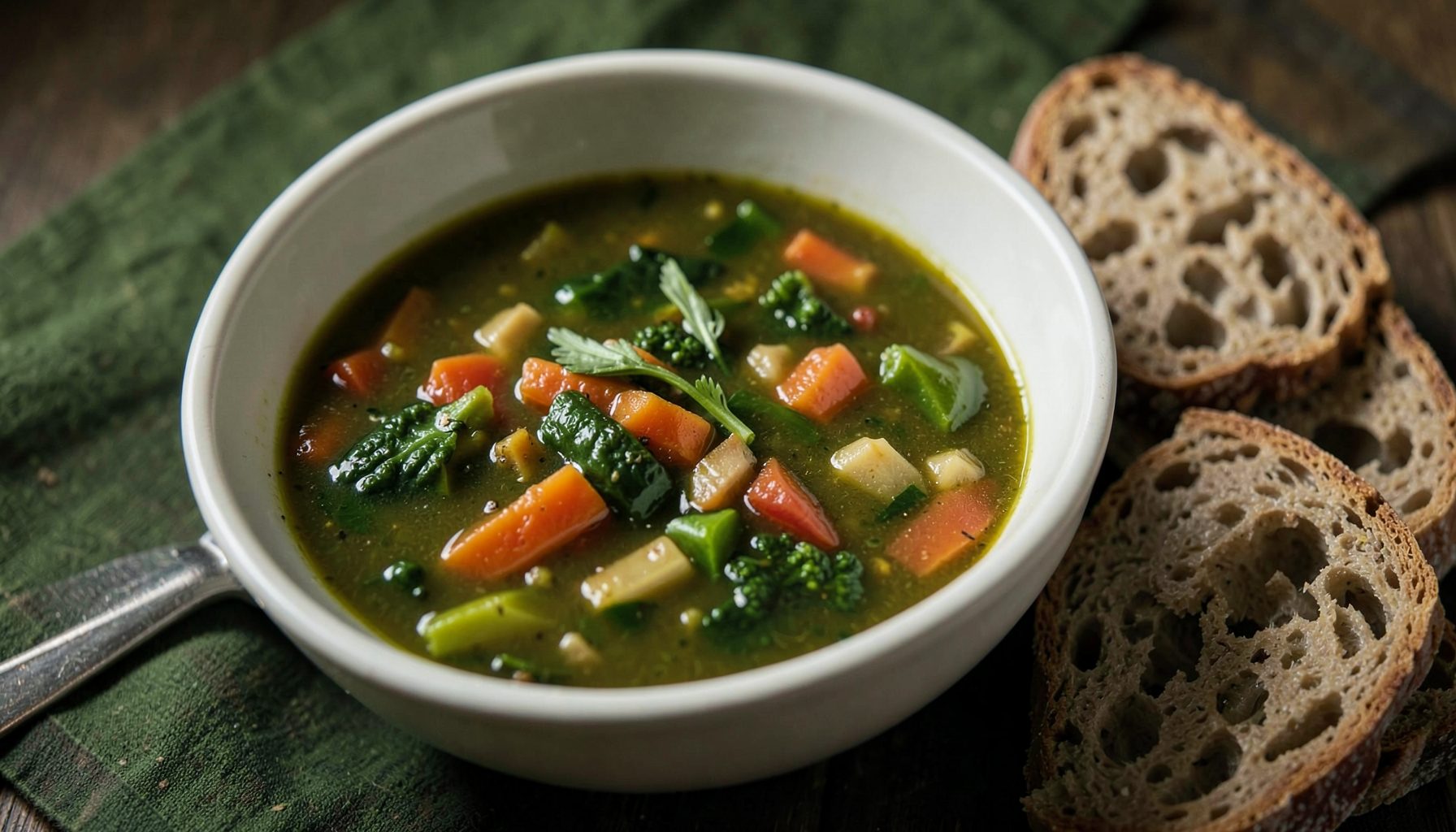
Ladle the hot broth into warmed, ovenproof bowls placed on a baking tray. Float one or two cheese-topped croutons on each serving, then sprinkle over a little extra Gruyère. Place the tray under the grill until the cheese is bubbling and bronzed, usually two to four minutes.
Use deep ceramic bowls rather than thin glass, which can crack under intense heat. If your bowls are not suitable for grilling, melt the cheese on the tray and place the finished croutons on the soup just before serving. This method gives better control and avoids an unpleasant scramble at the table.
Let the bowls stand for two minutes before carrying them to the table. The broth will be extremely hot, and the brief rest allows the cheese to settle. Finish with thyme leaves, black pepper and, if desired, a few drops of olive oil. The best spoonful includes broth, softened bread and elastic cheese together.
Pairing the soup with an Australian table
This is a substantial first course, so serve it with a crisp green salad dressed with mustard vinaigrette rather than a rich side dish. Bitter leaves such as radicchio or rocket balance the sweet onions, while thinly sliced apple or pear adds freshness. In warmer parts of Australia, the salad can keep the meal from feeling too wintry even when the soup is served after sunset.
For wine, choose something with acidity and enough body for the caramelised onions. A cool-climate pinot noir from Tasmania or the Yarra Valley is lovely, as is an unoaked chardonnay from Victoria. A dry sparkling wine also cuts through the melted cheese. These pairings work particularly well for a relaxed Sunday lunch or a dinner gathered around a kitchen island.
The soup can be part of a larger French-inspired meal, but it is equally welcome beside roast chicken or a simple mushroom tart. A small glass of dry cider is another good match. For a collection of seasonal ideas and family-shaped cooking stories, explore the kitchen journal alongside this recipe.
Preparing ahead and keeping the balance
The onion broth can be made up to three days ahead and refrigerated in a sealed container. In fact, its flavour often becomes more integrated overnight. Reheat it gently in a saucepan, adding a splash of water or stock if it has reduced too far. Prepare the croutons on the day so they remain crisp before meeting the soup.
You can also freeze the broth for up to three months, leaving out the bread and cheese. Thaw it in the refrigerator, reheat until steaming, and taste before serving. Freezing can mute seasoning slightly, so a small adjustment of salt, pepper or vinegar may be needed.
For a vegetarian version, replace the beef stock with a dark vegetable stock made from roasted mushrooms, onions, carrots and celery. A tablespoon of white miso stirred in at the end can supply savoury depth, but add it carefully because both miso and Gruyère contain salt. If you enjoy gentle heat, a pinch of cayenne in the onions adds warmth without changing the character of the dish.
Serving it with a personal touch
The pleasure of this soup lies in its unhurried transformation. It begins with onions that might otherwise be overlooked in a shopping bag and ends with a glossy, aromatic broth crowned by crisp bread and melting cheese. That contrast makes it feel celebratory without requiring an expensive ingredient list.
For a seasonal menu, follow the soup with a simple fruit dessert rather than another rich course. A warm bake can echo the caramel notes of the onions, and this spiced pear cake brings ginger and ripe fruit to the table. In Australia, use locally grown pears when they are abundant, or substitute apples during the cooler months.
The method rewards attention more than precision. Stir when the onions need it, taste the broth before salting, and let the cheese brown deeply enough to become fragrant. Food shaped by restaurant kitchens and home traditions often depends on those small choices; Bia Rich’s kitchen story reflects that same belief in thoughtful cooking and generous flavour.