

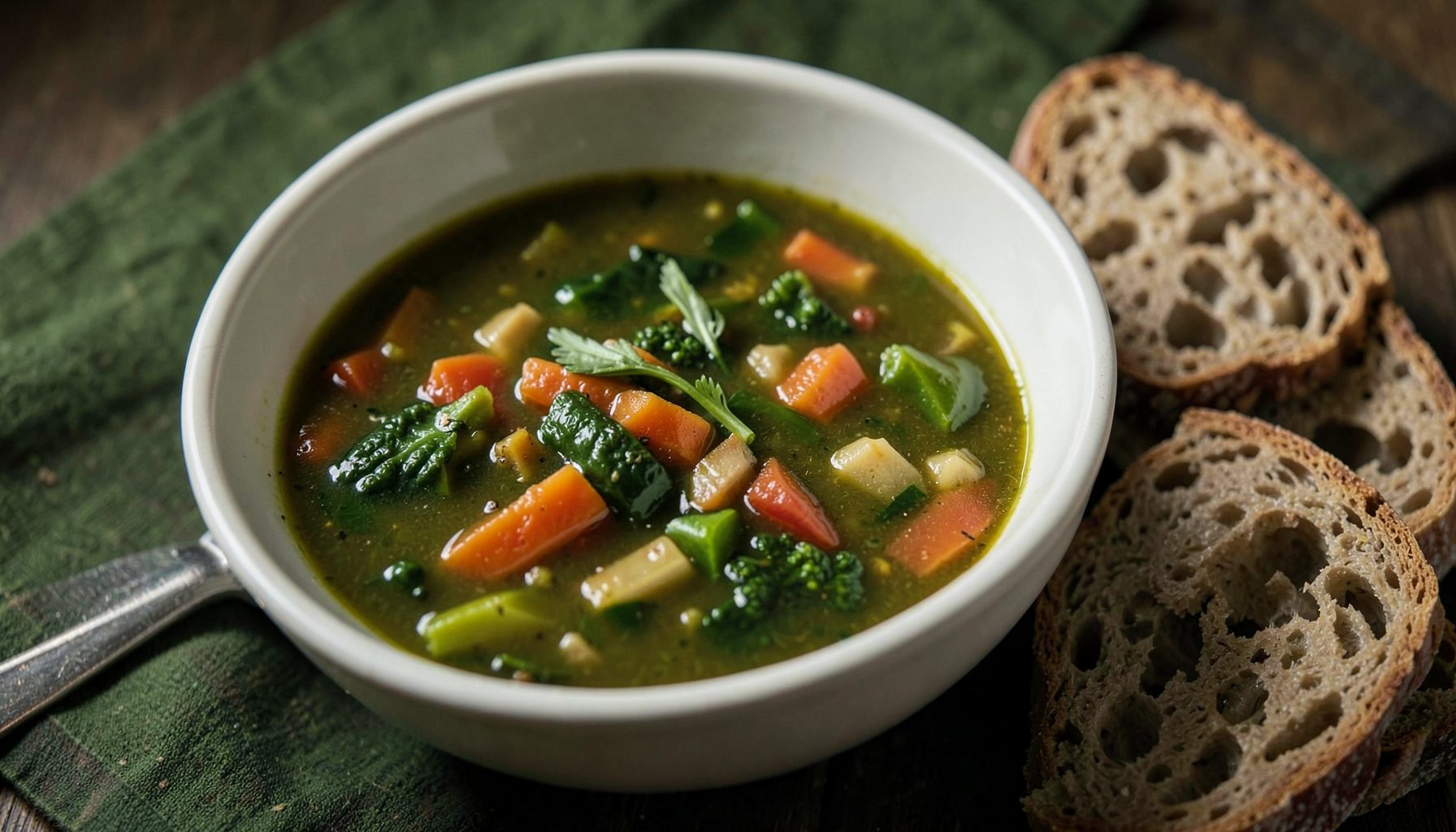
A peach and tomato gazpacho with basil oil
Ripe summer fruit makes a convincing case for cooking without the stove. Cooled, blended, and sharpened with vinegar, peaches and tomatoes become something between a chilled soup, a savoury smoothie, and the food you want on the verandah at lunchtime. A spoonful of basil oil keeps the bowl fresh rather than heavy, while a few good ingredients do most of the work. Learn more about Entrees.
This is the kind of cooking I enjoy after twenty years in New York City restaurants and in a North Carolina garden: food that honours the season without fuss. Australian summer markets are generous, although their best fruit arrives in different weeks from Queensland to Western Australia. A peach chosen at its peak needs no coaxing, while an underripe one will make the gazpacho taste flat.
Sweet, savoury, and sharper than it looks
Peaches bring roundness and perfume; tomatoes bring acidity, salt, and a savoury depth that stops the fruit from tasting like dessert. Together they make a more interesting balance than either ingredient alone. This is not a sweet soup in the conventional sense, and it should not be served like one. A little vinegar and plenty of salt turn soft summer produce into food with purpose.
Gazpacho has a long history in Andalusian kitchens, where cold soup made excellent use of hot-day gardens and the olive oil served at the meal. This version keeps that refreshing logic while giving the bowl an Australian accent. The fruit and vegetables taste themselves rather than disappearing under cream, stock, or heavy spices.
One detail matters more than any gadget: the soup must be properly chilled, but not flattened by ice. Cold sharpens the tomato and softens the peach, yet soaking the finished bowl in ice water can dilute every flavour. Aim for a temperature close to a cool room, around 10–14°C, and use ice only when the weather or the kitchen demands it.
Choosing fruit at an Australian market
At a Melbourne growers' stall, a Sydney neighbourhood greengrocer, or a market in Brisbane, look for tomatoes that smell of leaf and vine and yield gently to pressure. They need not be perfect: small scars disappear in the blender, whereas an anaemic tomato cannot be rescued by a good peach. Choose firm, heavy peaches with a sweet aroma around the stem; leave them at room temperature until they yield to a gentle press.
Seasonal timing varies widely. Peaches from the Stanthorpe district often reach Queensland and northern New South Wales before the cooler mainland states, while southern growers extend the season through January and February. “Summer” fruit on a shop shelf may have travelled farther than the vegetables beside it, so use your nose rather than the calendar alone. If the peach is fragrant and the tomato is ripe, the combination is ready.
Basil is the final member of the trio, and its leaves should be bright, unwrinkled, and free of black spots. Buy a generous bunch because the stems are useful for flavouring the oil, although only the leaves are blended. For home growers, Veggie Danielle has plenty of practical guidance on raising productive summer vegetables. Even a pot of basil on a sunny balcony can improve the finished bowl, although a market bunch will usually give a stronger aroma.
Blending a balanced gazpacho
The proportions can move according to the fruit, so use the comparisons below as a map rather than a rule. In every version, the vinegar and salt should remain assertive enough to keep the result lively.
| Style | Proportion | Main character | Best serving |
|---|---|---|---|
| Balanced | 2 peaches to 500 g tomatoes | Silky, gently sweet, savoury | A first taste on a warm day |
| Tomato-led | 1 peach to 600 g tomatoes | Brighter and more herb-like | Alongside grilled bread or cheese |
| Peach-led | 3 peaches to 400 g tomatoes | Rounder and softly floral | With peppery leaves and delicate seafood |
For the balanced version, ready two ripe but firm peaches, 500 g ripe tomatoes, half a cucumber, two tablespoons finely chopped red onion, one garlic clove, one tablespoon sherry vinegar, 100 ml extra-virgin olive oil, 150 ml cold water, and sea salt. Australian recipes favour metric measures, and grams are useful here because the liquid content of tomatoes can vary considerably.
Dice the tomatoes and put them in a colander over a bowl. Sprinkle with a teaspoon of salt and leave for 15 minutes, then drain and discard the collected liquid. This small pause concentrates the tomato flavour and prevents a watery soup. Peel the peaches if you prefer a completely smooth texture, but leave the skins on for colour and a subtle texture; blend them with the drained tomato, cucumber, onion, garlic, and vinegar until mostly smooth.
Add the olive oil while the blender is running, followed by enough cold water to make a loose, spoonable purée. Taste before adding more salt. If the mixture seems flat, add another splash of vinegar rather than more sugar; if it is too sharp, a little extra peach or oil will round it out. Chill for at least 45 minutes, then check the consistency again because the fruit continues to firm slightly in the refrigerator. For a fuller meal, the blog’s collection of hearty entrees offers ideas for turning a bowl of chilled soup into the centre of lunch.
Making basil oil that tastes fresh
The basil oil is as important as the ripe fruit, and it takes only a few minutes. Put 30–40 g of basil leaves in a clean jar with 150 ml extra-virgin olive oil and a small pinch of salt. Bruise the leaves gently between your palms, then cover the jar and leave it at room temperature for 20–30 minutes. Do not heat the oil: heat can dull the basil and remove the green, peppery notes that make the oil worthwhile.
Strain the oil through a fine sieve without pressing hard on the leaves. The liquid will be vivid green and taste more of basil than the steeped leaves themselves, which can become bitter. For a smoother result, blitz the leaves with the oil for a few seconds before straining. A tiny splash of the green oil in each bowl adds aroma rather than weight, and any remaining oil can be kept for tomorrow’s vegetables. The same basil-and-oil logic appears in a classic Margherita pizza, where fresh basil is added after baking so it stays lively.
A useful variation is to whisk basil oil with a spoonful of chilled gazpacho into a dressing. It is good over cucumber, green beans, or ripe tomato, and a spoonful stirred into yoghurt makes a quick sauce for grilled chicken. Keep the oil in a labelled jar in the refrigerator and use it within five days; cloudiness is usually the olive oil chilling rather than a reason to discard it.
Serving it for an Australian lunch
This soup suits the Australian habit of making lunch the main event of a weekend: serve it in chilled bowls with the windows open, and let people add their own toppings. The bowl should look abundant but remain light. A small spoonful of olive oil, a few leaves of basil, and something crisp are enough. The best garnishes echo the ingredients rather than competing with them.
For the bowl, choose from:
- Toasted almonds or walnuts, roughly chopped
- Thin curls of cured ham or prosciutto
- A spoonful of preserved lemon, chopped very finely
- Fresh basil leaves and a twist of black pepper
For a larger meal, think of the gazpacho as the opening course at a long, slow lunch. A chilled Australian Vermentino, a dry sparkling wine, or a crisp rosé will suit its acidity and fruit, while a green salad keeps the meal light. A torn piece of weekend challah beside the bowl adds a warm, slightly sweet contrast and is just as good with soup as with butter.
For the meal, consider:
- A green salad with cucumber and fennel, dressed in lemon
- Grilled prawns or white fish with lemon and fresh herbs
- Warm flatbreads, with the chilled gazpacho served alongside for dipping
Let chilled bowls sit on the bench for ten minutes before serving. The soup will taste brighter and the peaches rounder. Serve the basil oil in its own small bowl so each diner can add a little at the end.
Storing the leftovers safely
Gazpacho keeps well for two or three days, provided it is covered and kept properly chilled. Store it in the refrigerator at 5°C or below, the safe chilling level used in Australian food-safety guidance, and use a clean spoon so raw produce is not reintroduced after blending. The basil oil should be refrigerated separately and given a smell and a stir before use.
The Food Standards Code developed by Food Standards Australia New Zealand sets national food standards, while state and territory governments and local councils enforce rules for businesses and public events. A family lunch at home is straightforward; selling bowls at a school fair, community gathering, or market stall can trigger registration, food-handler, and premises requirements that differ by state. Anyone preparing food for others should check the relevant local council guidance before the event rather than assuming a domestic recipe is sufficient.
For the best leftovers, refrigerate the soup before the meal ends and keep the basil oil in its own jar. If the batch separates, whisk it hard or briefly return it to the blender; a splash of cold water will loosen it. The soup can also be frozen in a flat container for up to two months, although its texture will be silkier after thawing. Bring it slowly back to the refrigerator, stir well, and serve with fresh basil oil.