



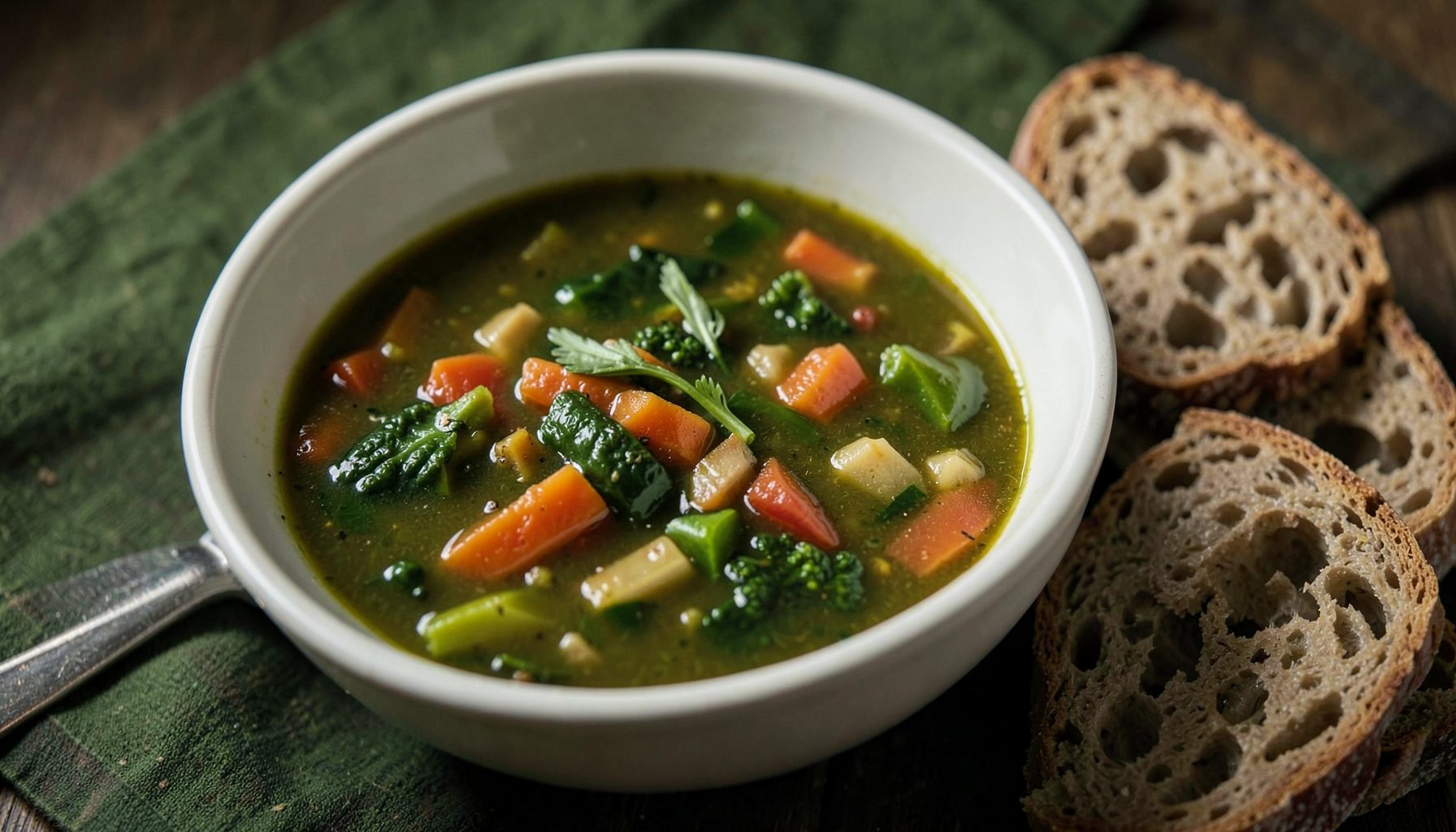
Spiced carrot and orange soup with ginger and turmeric
A fragrant bowl of carrots, orange, ginger and turmeric sounds right for a cold night, yet the citrus keeps it lively rather than heavy. The carrots contribute rounded sweetness, orange lifts that sweetness, and the warm spices add perfume without overwhelming the dish. It works as dinner with bread and a salad, or as lunch with a few eggs and something crisp from the oven. Learn more about Soups Sandwiches Breads.
The timing suits southern Australia particularly well. June, July and August bring frosty mornings, shorter daylight and reliable winter citrus, making this a soup for the season rather than an artificial use of leftover vegetables. Woolworths and Coles commonly sell carrots in 1 kg plastic bags, while Melbourne’s Queen Victoria Market gives you access to independent greengrocers and produce stalls selling smaller, more irregular roots that are often better value for cooking.
Many Australian cooks treat soup as a cool-weather dinner rather than simply a starter, with an arvo cuppa providing a small pause before the pot comes to the table. The measurements here stay metric, with grams and millilitres doing most of the work, while words such as “splash”, “handful” and “knob of butter” keep the instructions in familiar home-kitchen language.
Choose ingredients for a balanced bowl
Build the shopping list around full-sized carrots, fresh ginger and oranges with fragrant skin. A little planning also prevents the soup from becoming the entire meal, especially if you want to add something crisp, creamy or toasted alongside it.
The ingredients are:
- 1.5 kg carrots, scrubbed, tops trimmed and cut into 2 cm pieces
- 1 brown onion, finely chopped
- 3 garlic cloves, thinly sliced
- 20 g fresh ginger, finely grated, about 2 tbsp
- 2 tsp ground turmeric
- 1 litre vegetable stock
- 1 strip of orange peel with the white pith removed
- 2 oranges, juiced, with 30 ml reserved for finishing
- 2 tbsp olive oil
- 1 tbsp butter, optional
- 150 ml pouring cream or unsweetened oat milk
- Salt and freshly ground black pepper
- Coriander leaves, crème fraîche, pumpkin seeds, chilli flakes and chilli oil, to finish
Australian navel oranges are at their best during the colder months. Greengrocers use the term “seconds” for produce that is not quite cosmetically perfect, and those knobbly carrots or small oranges can be excellent here because shape does not determine flavour. Choose oranges that feel heavy for their size, and avoid pale, shrivelled skins.
Bia Rich brings two decades of New York City restaurant experience, family food traditions and a home kitchen in North Carolina to this kind of cooking. That combination of restaurant discipline and seasonal produce informs a soup that tastes carefully built but remains manageable at home. For the rest of the menu, the sides and sauces collection offers useful ideas for a crisp or creamy accompaniment.
Build a savoury base
Warm the olive oil in a large pot over medium heat. Add the chopped onion with a pinch of salt and cook for 6–8 minutes, stirring occasionally, until soft and translucent. The onion should not brown deeply because its natural sweetness needs to support the carrots and orange rather than compete with them.
Add the garlic and grated ginger and stir for another minute. Sprinkle in the turmeric and cook for 30–45 seconds, just until the oil takes on a deep golden colour and the kitchen smells warmly aromatic. Keep the heat moderate, since turmeric can scorch quickly and give the broth a bitter edge.
The slow start gives the finished soup savoury depth without a heavy stock or long list of hard-to-find ingredients. If you enjoy a sharper, dill-led alternative, the okroshka with sausage provides a useful contrast to this sunnier, gently spiced bowl.
Prepare the carrots and citrus
Scrub the carrots thoroughly, especially if they still carry soil from the market. Peeling is optional for tender roots, although older carrots with tough skin may need a light scrape. Cut them into similarly sized pieces so they soften at the same rate, and keep the pieces large enough to retain some texture during blending.
Use a microplane to remove the orange zest before cutting the fruit. Take only the coloured outer layer and leave behind the bitter white pith. Add the peel to the pot later, but remove it before blending. Juice the oranges, check for seeds and reserve about 30 ml in a small jug for the final adjustment.
Grate the ginger against the direction of its fibres and use a small spoon to scrape it from the skin. Young ginger can usually be scrubbed and grated unpeeled; peel older, knobbly pieces if the surface feels fibrous. Ground turmeric provides concentrated colour and an earthy, slightly bitter warmth, so measure it rather than judging the aroma alone.
Cook, blend and season
Pour in the stock and add the orange peel, carrots, onion, garlic, ginger and turmeric. Bring the liquid to a gentle simmer, then reduce the heat so it barely bubbles. Cook for 25–30 minutes, stirring occasionally, until a knife slides easily through the thickest carrot pieces. Keep the pot partly covered to limit evaporation.
Take the pot off the heat and remove the orange peel. An immersion blender gives the soup a smooth purée directly in the pot. A jug blender also works, although it needs careful handling: do not overfill the jug, vent the lid and start on a low speed, because hot soup can throw steam. Pass the purée through a fine sieve if you want an exceptionally silky texture.
Return the pot to low heat. Stir in about 90 ml of the orange juice and season with salt and black pepper. Add the cream or oat milk, taking care not to let the soup boil, then warm it through gently. Taste before adding the reserved citrus; extra orange juice brightens the finish, while a splash of stock loosens the soup if it has become too thick.
Add texture and fresh contrast
A smooth soup benefits from something crisp, fresh or rich placed on top. Finish each bowl with a spoonful of crème fraîche, a few coriander leaves and a small pinch of chilli flakes. Orange zest adds another aromatic note, while pumpkin seeds bring crunch and a mild roasted flavour. Toast the seeds in a dry pan for a couple of minutes until they begin to pop.
For a more substantial accompaniment, these rosemary baked potatoes are an easy oven job. They take roughly 45 minutes at 180°C in a conventional oven, or 160°C with a fan, and can cook while the soup simmers on the hob. Splitting one open beside the bowl gives the meal a soft, starchy contrast to the citrus-spiced purée.
Good bread matters too, particularly a crusty sourdough loaf for catching the broth at the bottom of the bowl. A small handful of bitter leaves or a dressed green salad will also balance the sweetness, while the ginger and turmeric keep the meal from feeling too delicate. Let the garnishes be added at the table so their textures stay distinct.
Store it and serve it your way
The soup can be made a day ahead, which gives the flavours time to settle. Cool it promptly and refrigerate it in shallow containers for up to three days. For longer storage, freeze it without the cream, since dairy can split during thawing. Properly covered, the soup keeps its flavour for around two months in the freezer.
Reheat only the portion you need, adding a splash of stock or water if it has thickened overnight. Warm it gently on the stove, stir in any cream after the soup is heated, and add the reserved orange juice just before serving. That last addition preserves the citrus aroma and keeps the final flavour bright.
For a warm-weather menu, the grilled peach salad brings juicy fruit, bitter leaves and savoury saltiness to the table. The soup can then be served as a smaller bowl rather than the centre of the meal. Its flavour remains sweet, aromatic and gently earthy, with bright citrus holding the warm spices in balance.