

A Fresh Mint and Pea Soup with a Cool Dollop of Crème Fraîche
As the jacarandas begin to bloom across Sydney and the mornings in Adelaide carry that soft, cool clarity, the markets of Australia shift into their most generous stretch. From the bustling aisles of Queen Victoria Market in Melbourne to the sun-drenched stalls of the Carriageworks Farmers Market in Eveleigh, shoppers reach for the first plump green peas of the season, their pods still cool from overnight delivery. This is the moment when a bowl of something gentle and bright makes sense, something that tastes of spring gardens and quiet afternoons rather than heavy stews or roasted roots.
Fresh mint and pea soup is one of those dishes that feels effortless yet asks for a little care. The sweetness of young peas meets the cool perfume of mint, lifted by a swirl of crème fraîche that softens the edges and adds a quiet richness. It is the kind of recipe that rewards the cook who treats a few humble ingredients with respect, the way I learned to do in restaurant kitchens from Brooklyn to Brisbane, where restraint and freshness always spoke louder than fuss.
In this piece, I want to walk you through the kind of pea soup I make at home on the edge of the North Carolina woods, using ingredients you can easily find across Australia. There will be notes on choosing peas and mint, on building a base that does not fight the peas, and on the small finishing touches that turn a pot of green purée into something worth lingering over.
The Spring Garden Connection
In Australia, spring peas arrive roughly opposite to the rhythm in the Northern Hemisphere, which means October through November is when garden peas, snow peas, and sugar snaps are at their tender best. Travelling from the cool growing regions of Tasmania and the Adelaide Hills, they show up at greengrocers still carrying a faint bloom on their pods. That bloom is worth paying attention to, because it tells you the peas were picked recently and have not spent days losing moisture in transit.
Mint behaves differently. It grows almost year-round in temperate parts of the country, from backyards in suburban Perth to balcony pots in high-rise Brisbane apartments. The peppermint and spearmint varieties most often sold at supermarkets work beautifully here, though if you can find a bunch of fresh shoots at a weekend market, you will notice a softer, almost floral note that processed bunches can lack.
The appeal of this soup lies in that tension between sweet peas and cooling mint. It is a balance I find especially welcome after a long walk through the Royal Botanic Gardens in Sydney or a morning spent pulling weeds in my own patch. The dish does not ask for much, but it does ask for ingredients that are truly fresh, treated gently from pot to bowl.
Choosing Peas and Mint at the Market
When I shop for this recipe, I look for peas that feel heavy in their pods and snap cleanly when bent. At the Adelaide Central Market or Queen Victoria Market, vendors often let you taste a raw pea before buying, and that is always the best test. If the peas taste starchy or chalky, they are past their window. If they taste grassy and sweet, with a burst of green juice, they are ready.
Snow peas can work in a pinch, though they bring a flatter sweetness and a slightly more vegetal edge. Sugar snaps are wonderful if you want a hint of crispness in the finished soup, though you may want to strain the purée more carefully to keep the texture silky. For the most classic, sweet result, however, shelling peas remain the gold standard.
For mint, I choose bunches with perky, unblemished leaves and stems that feel firm. Yellowing leaves or blackened tips mean the bunch has been sitting too long. I avoid pre-cut mint sold in clamshells when I can, since the chopped leaves often oxidise quickly and lose their bright, menthol lift. If you grow your own, cut the stems just above a leaf joint to encourage new growth.
Building a Gentle Aromatic Base
A pea soup does not need a heavy base. Unlike a traditional gumbo, which leans on a deeply caramelised roux for its character, this dish stays in a softer, greener register. I start with a small amount of unsalted butter and a finely diced shallot, cooked only until translucent and fragrant. A squeeze of lemon and a pinch of sea salt go in early, because peas respond to acidity and seasoning from the very beginning of cooking.
Some cooks add a peeled potato to the pot, which helps thicken the soup naturally without dairy. I often do this when I want a lighter bowl, especially if I am serving it as a starter before a larger meal. The potato dissolves into the peas as they cook, lending body without weighing the flavour down.
For those who love the kind of slow-built, savoury depth that comes from a properly browned roux, I have written separately about how to make a rich dark roux for gumbo or etouffee, a technique that rewards patience and a heavy-bottomed pan. That kind of base belongs to a different family of soups, the kind meant for cooler evenings rather than a bright spring lunch, but understanding both styles makes you a more intuitive cook.
Blending for Silky Texture
Once the peas are tender, the soup needs to be blended carefully. I prefer using an immersion blender directly in the pot, because it keeps the kitchen cooler and avoids the dangerous business of transferring hot liquid to a countertop blender. If you do use a countertop blender, work in small batches and vent the lid to let steam escape.
The goal is a purée that is silky but still has a whisper of texture. Over-blending can make the soup gluey, especially if you have added potato. I stop just before the mixture looks completely uniform, then pass it through a fine-mesh sieve if I want a truly refined finish. For a more rustic bowl, I leave it as is and call it good.
At this stage, I taste and adjust. A splash of vegetable stock can loosen the soup if it feels too thick. A small knob of butter whisked in at the end gives a lovely gloss. Mint goes in just before blending or stirred in at the very end, because prolonged heat dulls its perfume and turns the colour a drab olive.
The Crème Fraîche Finish
The crème fraîche is what makes this soup feel finished rather than merely blended. Its gentle tang balances the sweetness of the peas, and its richness gives the bowl a satisfying weight without making it heavy. Under Australian food labelling laws, products labelled crème fraîche must meet specific fat content standards set out in the Australia New Zealand Food Standards Code, so what you find in the chilled dairy section of any major supermarket will behave consistently in the kitchen.
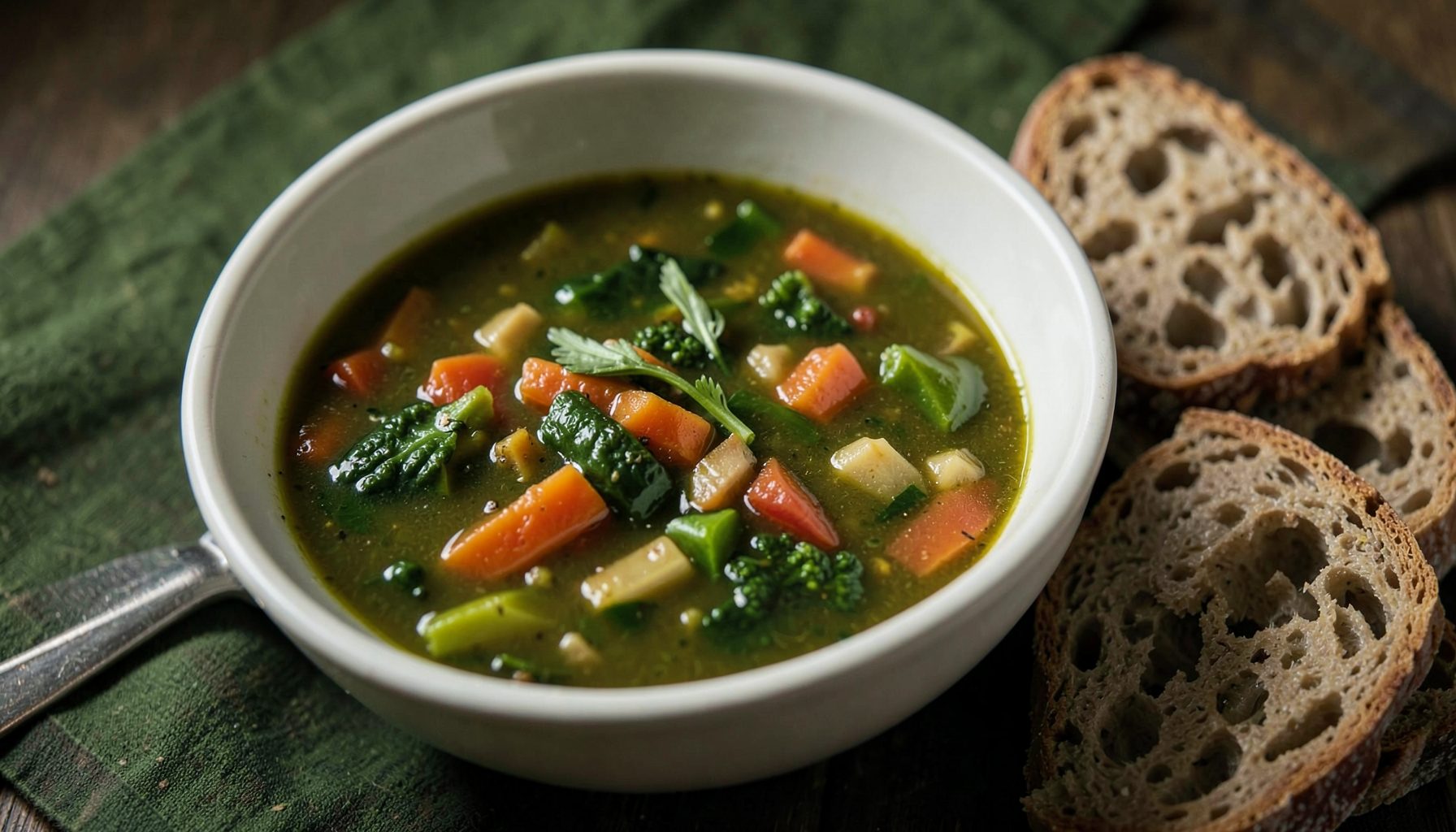
I spoon the crème fraîche into each bowl just before serving, dragging a small knife or the back of a spoon through it to create a soft ripple across the green surface. A drizzle of good olive oil, a few freshly torn mint leaves, and a grinding of black pepper finish the plate. Some cooks add a scattering of crisp pancetta or toasted seeds for contrast, both lovely if you want something heartier.
If crème fraîche is hard to find, a thick Greek-style yoghurt whisked with a touch of cream and a squeeze of lemon will get you close. It will be slightly sharper and less fatty, but still pleasant. Avoid anything labelled as a low-fat yoghurt, which can split when stirred into a warm soup.
Serving with Wine and Bread
Wine pairings for a soup like this are simple and forgiving. A young Sauvignon Blanc from Margaret River, with its cut-grass and citrus notes, mirrors the freshness of the peas beautifully. A bone-dry Riesling from the Clare Valley or Eden Valley is another reliable choice, especially if the soup has a touch of richness from butter or crème fraîche. For something sparkling, an Adelaide Hills sparkling wine brings a lovely mineral lift that scrubs the palate between spoonfuls.
On the bread front, a simple slice of sourdough, lightly toasted and rubbed with a halved clove of garlic, is all you need. In my home, I keep a loaf of country-style sourdough on the counter most days, and it has become the default partner for almost any spring soup. If you want something softer, a warm flatbread or a thick slice of pane di casa works just as well.
For a more substantial meal, you can pair this soup with a leafy side salad dressed simply with olive oil, lemon, and shaved fennel. It is also lovely as a first course before a roasted fish or a simple grilled chicken. There is something satisfying about serving a soup that looks as though it took hours, when in truth the pot was on the stove for barely twenty minutes.
Storing and Seasonal Twists
Leftover pea soup keeps in the fridge for two to three days in a sealed container. The colour may dull a little, but a fresh handful of mint stirred in just before reheating will revive it. I tend to reheat gently on the stove rather than in the microwave, because peas respond better to slow, even warmth.
For a richer, more tropical twist, you can borrow a little inspiration from a creamy coconut chicken soup that I make on cooler evenings, swapping the chicken for sweet potato or roasted cauliflower. That kind of cross-pollination, taking a base technique and turning it toward a new flavour profile, is one of the quiet joys of home cooking.
In the heat of a Brisbane summer, I sometimes serve this soup slightly chilled, almost like a green gazpacho. A few ice cubes stirred in at the end cool it just enough, and the flavours seem to sharpen in the cold. In winter, by contrast, I lean on heartier greens like English spinach or silverbeet, treating the same gentle base with a different set of vegetables. The method stays the same; only the season changes.
A Few Friendly Notes Before You Cook
- Choose peas in their pods whenever you can, since they hold their sweetness far better than pre-shelled peas.
- Add mint at the very end of cooking to preserve its colour and perfume.
- Use an immersion blender if you have one, for safety and ease.
- Pass the soup through a sieve for a refined finish, or leave it rustic for a homelier bowl.
- Always taste and adjust seasoning just before serving, because peas can vary in sweetness from batch to batch.